



The Fourth Sunday of Easter

About 20 years ago, the Episcopal Cathedral of St. Paul’s in San Diego opened its doors to the family and friends of a thirty-one-year-old gay businessman who served as Vice-President of the San Diego Human Dignity Foundation and the Greater San Diego Business Association.
His premature death during a ski vacation from an altitude-induced heart attack stunned the community.
The Roman Catholic bishop of San Diego refused him burial, to the shock of the grieving family. It struck a raw nerve with me. The dean of St. Paul’s had this to say, “Our basic philosophy is whoever you are or wherever you find yourself on the journey of faith, we welcome you. We learned from a city councilwoman that the McCusker family needed some help, and we were happy to offer that.”
A powerful statement of faith, love, compassion and comfort is posted at the entrance to the church: “All persons who enter this sacred place enter with the promise that they will be free to be who they are…If you are visiting please know that you are granted immunity from the painful ravages of religious bigotry…”
Shortly after preaching this that Sunday, in 2005, we installed a sign in the narthex of St. Paul’s, Norwalk, with that same statement. The Message: Our door is open to all—no exception!
“Very truly, I tell you, I am the gate for the sheep. Whoever enters by me will be saved, and will come in and go out and find pasture.”
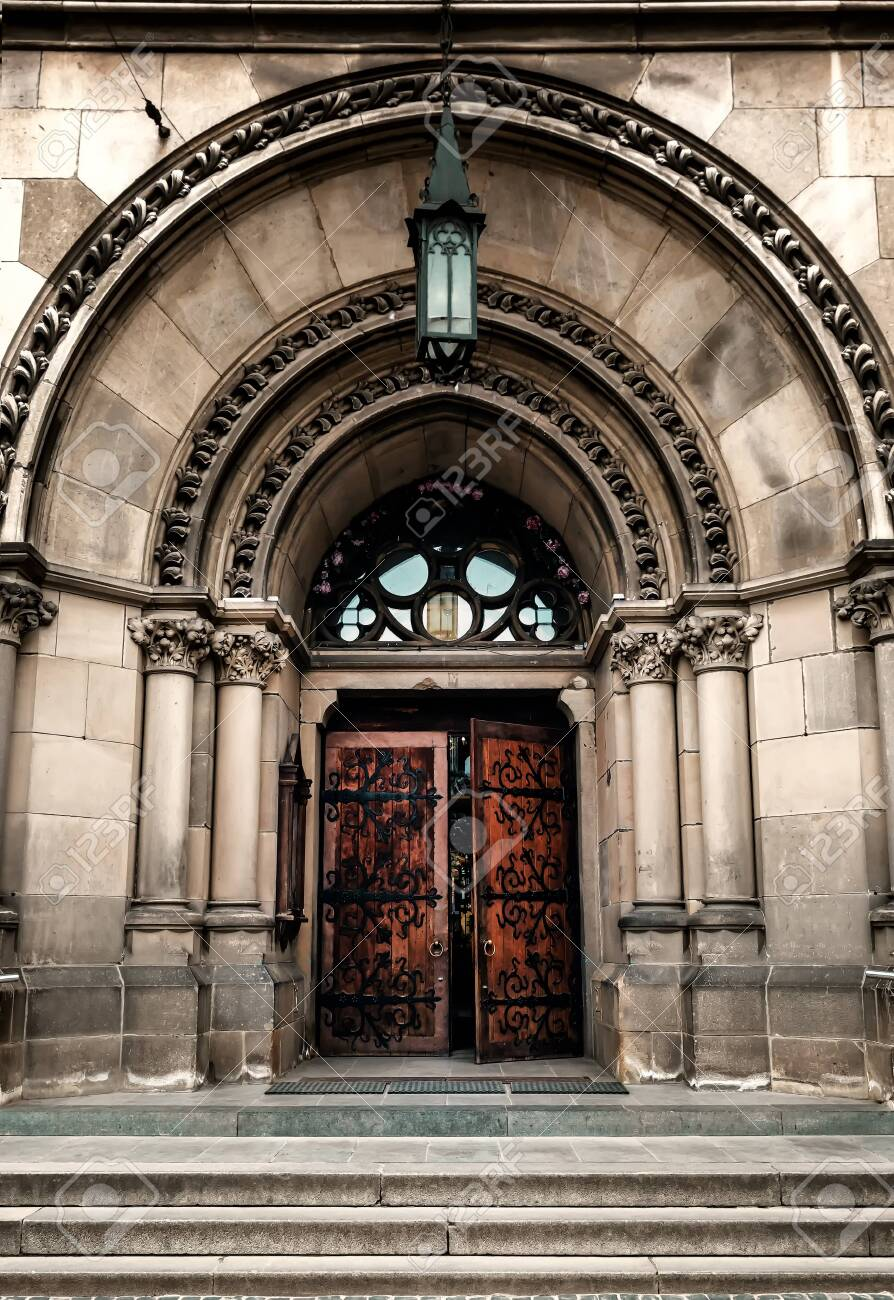
A distinguished church architect once declared that the most important part of a church is the front door. You might expect it to be the chancel, or the Altar, or the baptistery, but, no, he maintained quite adamantly that it is the front door. That’s interesting because today we hear Jesus refer to himself as “the gate,” which is one of a number of translations of the word θυρα in the original Greek text, another which is “door.”
Imagine a community with an open door—a place meant for safety, rest, and belonging. Anyone who tries to climb in through a window or sneak around the back isn’t there for your good. They’re there to take advantage, to manipulate, to use.
But the one who comes through the actual door—the one who doesn’t need tricks or force—that’s the real shepherd. The real shepherd in San Diego welcomed everyone to enter through that door to safety and freedom. As would Jesus.
Jesus says: Let me make this plain. I am the doorway. I’m the opening into safety, into freedom, into a life where you don’t have to keep looking over your shoulder. Others have come with big promises and hidden agendas—leaders, systems, voices that take more than they give. They drain life.
But I’ve come so that people can actually live—fully, freely, abundantly. Not just surviving, not just coping, but stepping into a life that feels spacious, grounded, and real.
We live in a world where everyone wants access to us. Emails, notifications, scams, spam, influencers, politicians—everybody’s trying to get in. And Jesus gives us this simple test: Pay attention to who comes through the front door. The real shepherd doesn’t sneak, pressure, or manipulate. The real shepherd doesn’t climb through windows or break in through the side.
The real shepherd comes openly, honestly, with no hidden agenda. John 10 is Jesus saying: You can tell the difference between someone who wants something from you and someone who wants something for you. And I am the doorway to the kind of life where you don’t have to keep bracing for the next thing that might hurt you.
Most of us trust our phones to recognize our voices better than we trust ourselves. We say “Hey Siri” or “Hey Google,” and the device wakes up because it knows who’s speaking. But here’s the thing: our hearts and souls have voice recognition too. We’re surrounded by voices—political voices, advertising voices, religious voices, anxious inner voices—each one trying to tell us who we are and what we should fear.
And into that noise, Jesus says: My sheep know my voice. Not because we’re especially holy, but because his voice sounds like life, not fear; freedom, not pressure; truth, not manipulation.
This text isn’t about livestock. It’s about learning to recognize the one voice that doesn’t use us, drain us, or sell us something—but leads us toward life that’s actually worth living.
Jesus is blunt: there are forces in this world that steal, kill, and destroy. Some of them are external. Some of them live rent-free in our own heads. But the story doesn’t end there. Because the Shepherd keeps calling. Keeps naming. Keeps leading. Keeps opening the door to a life that isn’t defined by fear or scarcity.
So may we walk through that doorway this week— with courage, with clarity, with our ears tuned to the voice that brings life, and our hearts open to the abundance God is already placing in our path.
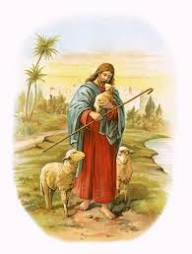
All of us, at any given time, are God’s vulnerable sheep who need the safety and refuge of a community with a wide open door where grace abounds and where we have access to the entrance to a new world of living and being. By the grace of God, we have arrived there.


Comments