



The Third Sunday after Pentecost

This Gospel always gets my attention. It was a cold, icy winter night in January, 1993, when I sat in that first pew for the liturgy of my reception as priest in the Episcopal Church. This Gospel was the text on which my mentor, Father Richard Van Weely, preached. This morning, thirty-three years later, as we gather at St. Andrew’s days ahead of the observance of Juneteenth, we join a freedom story much older and much wider than our own. In Exodus, we hear of a God who listens to the cries of an oppressed people and refuses to let their suffering be the final word.
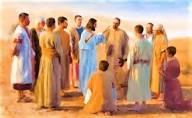
And in Matthew, we meet Jesus who looks at the crowds — weary, overlooked, pushed to the margins — and his heart fills with compassion. He sends his followers out not with power as the world defines it, but with authority rooted in healing, restoration, and liberation.
Here in Milford, we know something about what it means to be a community that shows up for one another — in storms, in grief, in rebuilding, in hope. Juneteenth invites us to widen that circle of compassion, to remember that the work of freedom is never abstract. It is always embodied, always local, always about real people whose dignity has been denied or delayed.
Jim Crow refers to the system of laws and practices that enforced racial segregation and discrimination in the United States, especially in the South, from the late 1800s through the mid‑20th century.
These laws mandated “separate but equal” facilities, restricted voting rights, and created widespread political, economic, and social disadvantages for Black Americans.
The name “Jim Crow” comes from a racist minstrel‑show character created in the 1830s by a white performer. He dressed in tattered clothes, darkened his face with burnt cork, and performed a mocking song-and-dance routine called “Jump Jim Crow.”
The character became wildly popular — and his name became shorthand for the entire system of racial segregation, humiliation, and legal oppression that later spread across the South. So, the laws weren’t named after a real person — they were named after a caricature designed to demean Black people, which makes the term itself part of the violence of the era.
Today, the Scriptures remind us that God’s story is a freedom story. That liberation is not a side project of faith but the heartbeat of it. And that Jesus still sends his people — including us — to see the suffering around us, to name it, to confront it, and to join God in the work of setting people free.
On Juneteenth, I’m sure a lot of people will be celebrating a three-day summery weekend, heading to the beach or for a mini-vacation. I suspect traffic will be crazy, while too many folks will perhaps be unaware of why the national holiday exists, yet we need to remember that freedom in this country came late — and that the work of liberation is still unfinished.
But we also remember that God has always been on the side of the oppressed, always stirring up prophets, midwives, disciples, and ordinary people to say: This is not the end of the story. And it isn’t because Jim Crow culture is still alive and well.
When I was rector in Norwalk, we invited the black members of the parish to come together on a Sunday afternoon and tell some of their stories. They were both startling and heart wrenching. The VP of human services for Save the Children shared the time when as a soldier marching in an all-black unit during the 1950’s Korean War, people on the sidelines urinated on them. The mother of a physician told of the time her son the doctor was stopped by the police in Darien and asked why he was driving a BMW.
And now, when voting districts, especially in the South, are maneuvered to exclude people of color, that looks suspiciously like racism to me. When African-American competent, faithful, military officers are denied promotions because of the color of their skin, Jim Crow is at work.
When black folk are told that there are plenty of jobs for them in factories, ignoring the fact that African-Americans are doctors, professors, attorneys, IT specialists, and have been Supreme Court Justices and a President of the United States, then that looks suspiciously like racist language to me.
And, yes, even in the church, even in this Diocese. A young, brilliant, talented African-American priest who has served for a few years as assistant rector in one of our parishes recently applied to a church in Connecticut for the position of rector.
When he arrived there for the interview with the vestry, he was greeted with, “oh, we didn’t know you were black.”
As we go forth from St. Andrew’s on this Juneteenth Sunday, we carry with us the witness of Exodus and the charge of the Gospel. We follow a God who breaks chains and a Christ who sends disciples into the world to heal, to restore, and to resist every force that diminishes the children of God.
Juneteenth is not only a commemoration of what happened in Galveston in 1865. It is a reminder that freedom delayed is still freedom demanded. It is a reminder that God’s people are never permitted to grow comfortable with systems that wound, diminish, or forget.

And it is a reminder that the Spirit still equips us — with compassion, courage, truth‑telling, and the power to cast out the small and large evils that cling to our world.
The world is aching for mercy, and God is still sending us to bring it. This is not the end of the story.


Comments